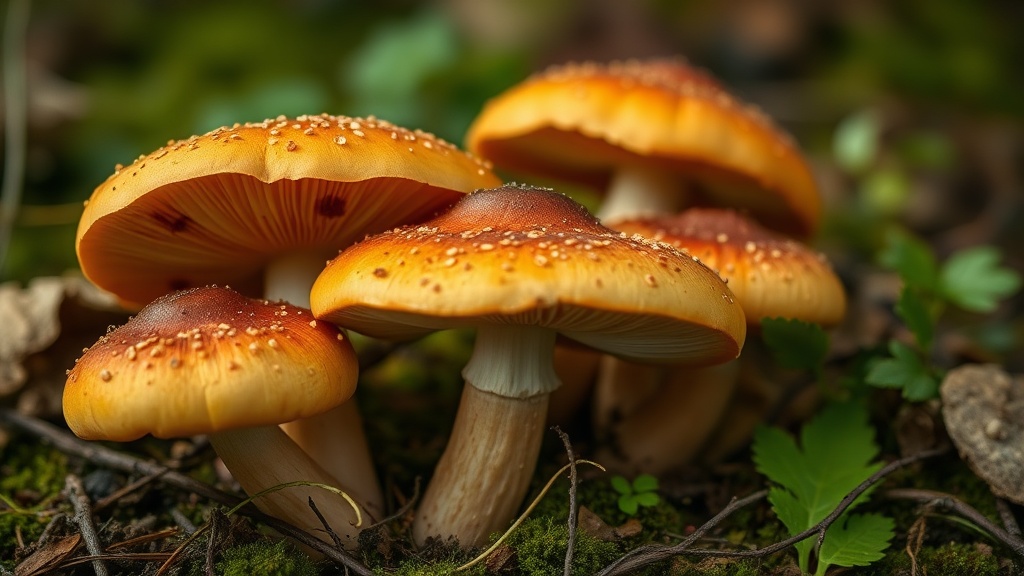
A Beginner's Guide to Identifying Edible Wild Mushrooms

Finding dinner in the forest isn't a fantasy—it's a skill thousands of foragers practice safely every year. This guide covers the fundamentals of mushroom identification: what visual features matter, which species suit beginners, and the safety protocols that separate a memorable meal from a trip to the emergency room. Whether you're looking to reduce grocery bills, connect deeper with local ecosystems, or simply try something more exciting than supermarket portobellos, mushroom foraging offers tangible rewards for those willing to learn methodically.
What Equipment Do You Need to Start Foraging?
Not much, honestly. A sharp knife (the Opinel No. 8 folding knife works beautifully), a basket or mesh bag for air circulation, and a field guide you can actually read in the field. Skip the plastic bags—they trap moisture and turn your harvest into slime before you get home.
Serious beginners should add a 10x jeweler's loupe for examining gill attachment and spore surface texture. The Belomo 10x Triplet Loupe runs about $30 and reveals details invisible to the naked eye. A small spray bottle with water helps refresh wilted specimens for photography—documenting finds matters more than hauling home buckets.
Here's the thing about gear: expensive doesn't mean better. That $200 mushroom knife with the brush and ruler? A $15 pairing knife and a soft paintbrush work identically. Spend money on knowledge first—books, workshops, guided forays—then upgrade tools as patterns emerge in what you actually harvest.
Wear sturdy boots (the forest floor surprises). Bring a compass or GPS unit—phone batteries die, and mushroom spots rarely have cell service. Pack a whistle. Not because mushrooms attack, but because getting lost looking at fungi happens more often than people admit.
Which Wild Mushrooms Are Safest for Beginners?
Start with "the foolproof four"—species with no toxic lookalikes in North America. These aren't just safe; they're delicious and relatively common across temperate forests.
| Mushroom | Key Identifiers | Best Habitat | Season |
|---|---|---|---|
| Chicken of the Woods (Laetiporus sulphureus) |
Bright orange-yellow shelves, no gills, grows on oak/hemlock | Dead or dying hardwoods | May–October |
| Oyster Mushroom (Pleurotus ostreatus) |
White to gray caps, decurrent gills running down stem, grows in shelf-like clusters | Dead standing trees, stumps | Year-round in mild climates |
| Morel (Morchella spp.) |
Honeycomb cap, hollow stem and cap interior, completely attached to stem | Burn areas, dying elms, old apple orchards | April–June |
| Giant Puffball (Calvatia gigantea) |
White ball 8–24 inches across, solid white interior when cut, no gills/pores | Meadows, edges of forests | August–October |
The catch? Even "foolproof" requires verification. Chicken of the Woods causes allergic reactions in about 5% of people—start with a small portion. Morels must be cooked thoroughly; raw morels contain hydrazine toxins that break down with heat. Giant puffballs harvested past their prime turn to greenish spore dust inside—edible only when the flesh remains uniformly white and firm.
Never consume anything based on this article alone. Cross-reference with MushroomExpert.com or consult regional guides like Mushrooms of the Pacific Northwest by Steve Trudell and Joe Ammirati. Regional variation matters enormously—what's safe in Oregon might have a toxic cousin in Appalachia.
How Do You Tell Edible Mushrooms From Poisonous Ones?
There is no universal rule. None. "Poisonous mushrooms are brightly colored" is dangerously false (the Death Cap is pale green-white). "Peeling caps are safe" kills people annually. "Silver spoon test" belongs in folklore, not foraging.
Proper identification requires examining multiple features systematically:
- Spore print color — Place cap gill-side down on white and black paper for 2–6 hours. White, cream, brown, black, or pink spores each point to different families.
- Gill attachment — Free from stem (notched), attached (adnate), or running down it (decurrent)?
- Stem features — Ring (annulus), cup-like volva at base, reticulation (net pattern), or smooth?
- Flesh reaction — Bruising color when cut or scratched?
- Habitat association — Growing from soil, wood, or other organic matter? Nearby tree species?
That said, beginners should absolutely avoid any mushroom with white gills and a volva (the egg-like cup at the stem base). This describes the Amanita genus—home to the Death Cap and Destroying Angel. No culinary experience justifies the risk when learning.
Worth noting: smell matters more than you'd think. Fresh chanterelles smell faintly of apricots. King boletes (porcini) have a pleasant, somewhat nutty aroma. The Sickener (Russula emetica) smells unremarkable but tastes peppery-hot—though tasting for identification should only happen after extensive training, and even then, spit; don't swallow.
The Truth About Mushroom Toxins
Mushroom poisoning isn't immediate food poisoning—it's often delayed, insidious, and sometimes fatal. Amatoxins (found in Death Caps) have a latency period of 6–24 hours. Initial symptoms resemble stomach flu, improve for a day or two, then liver and kidney failure begin. By then, treatment options narrow dramatically.
Other toxins act faster. Coprine (found in some Coprinus species) causes violent illness when combined with alcohol—even days later. Muscarine produces SLUDGE syndrome: Salivation, Lacrimation, Urination, Defecation, GI distress, and Emesis. Not fatal usually, but deeply unpleasant.
"When in doubt, throw it out" isn't cautious advice—it's the only advice that keeps foragers alive through their learning years.
Where Are the Best Places to Forage for Beginners?
Start local, start small, start with someone who knows. Mycological societies across North America offer guided forays—The North American Mycological Association maintains a directory of affiliated clubs. These outings provide mentorship no book replaces: seeing habitat context, handling specimens, asking questions in real-time.
Urban foraging presents unique challenges and opportunities. City parks often host oyster mushrooms on storm-felled trees. Wood chip landscaping beds produce Wine Caps (Stropharia rugosoannulata) with surprising reliability. The trade-off? Contamination risks—lead, pesticides, pet waste. Avoid harvesting within 50 feet of busy roads or treated landscaping.
Provincial and state parks vary enormously in foraging regulations. British Columbia generally permits personal mushroom collection in provincial parks (check current rules). Washington State requires permits for commercial harvesting but allows personal amounts freely in most state forests. National parks in the U.S. typically prohibit mushroom collection entirely—check specific park regulations before heading out.
Private land requires permission. Landowners appreciate respectful requests: explain what you're seeking, offer to share findings, and respect boundaries absolutely. Building relationships with private landowners often yields the most productive, least-pressured foraging spots.
Documenting Your Finds
Photograph everything—in situ (in place), top of cap, gill surface, stem base, and spore print. Note the date, location, habitat, and nearby tree species. Apps like iNaturalist help track observations and connect with identifiers, though never rely solely on app identifications for edibility decisions.
Keep a foraging journal. Not just what you found—what you thought it was, why, and what experts confirmed. Pattern recognition builds slowly. The mushroom that stumped you in April often clicks into recognition by October.
How Should You Prepare and Store Wild Mushrooms?
Clean gently with a soft brush—mushrooms are mostly water, and soaking ruins texture. Trim tough stem bases. Slice thicker specimens to check for insect tunnels (a few are normal; infested specimens go to the compost).
Cooking isn't optional. Heat destroys many mushroom toxins and breaks down chitin (the structural compound that makes raw mushrooms tough and hard to digest). Sauté in butter or oil over medium-high heat until edges crisp. Wild mushrooms release significant moisture—let it evaporate before adding salt, or you'll boil them instead of browning.
Preservation methods vary by species:
- Drying — Best for boletes, morels, and chanterelles. Use a dehydrator at 110°F or string them threaded on fishing line. Store in airtight containers with desiccant.
- Freezing — Sauté first, then freeze in portions. Raw frozen mushrooms turn to mush when thawed.
- Pickling — Works beautifully for firm mushrooms like Lion's Mane. Use standard vinegar brine with herbs.
Fresh storage is brief—most wild mushrooms last 3–7 days refrigerated in paper bags. Never seal in plastic. The exception: morels stored dry in a paper bag in the refrigerator can last two weeks.
The transformation from forest floor to dinner plate carries unmatched satisfaction. Chanterelle risotto made with mushrooms you identified, harvested, and prepared connects you to space and season in ways supermarket produce never achieves. That connection, built on patience and respect for complexity, makes the learning curve worthwhile.