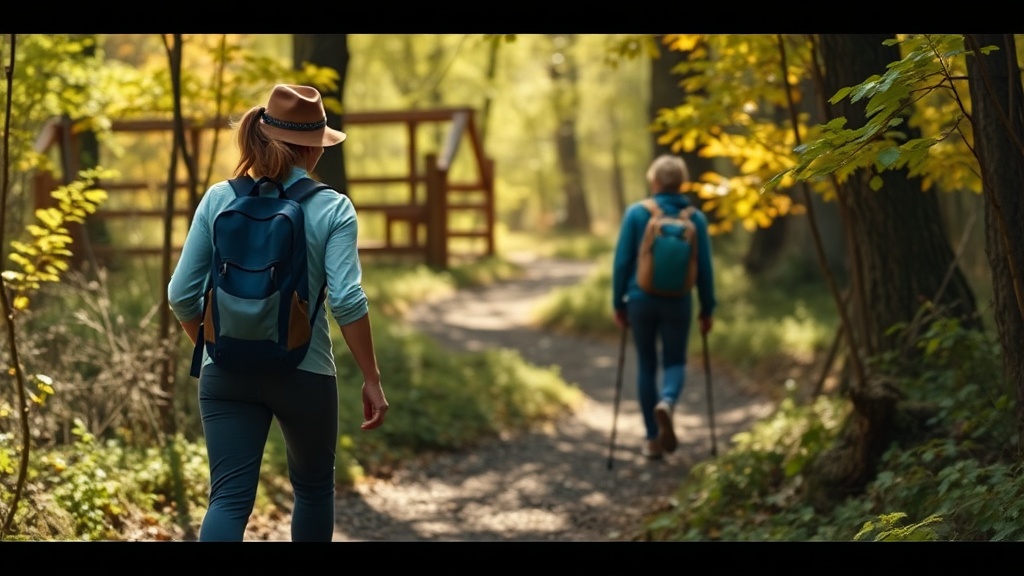
A Beginner's Guide to Mindful Nature Walking

This guide covers the fundamentals of mindful nature walking — a practice that blends slow, intentional movement with outdoor immersion to reduce stress and sharpen mental clarity. You'll learn how to start, what gear actually matters, and where to go. Whether you're overwhelmed by daily noise or simply curious about a deeper way to experience trails, this post will give you a clear, practical path forward.
What Is Mindful Nature Walking?
Mindful nature walking is the practice of moving through natural spaces with full attention on the present moment — your breath, your footsteps, the breeze, the sounds around you. Unlike a fitness hike where the goal is distance or calories burned, this practice prioritizes awareness over achievement. You might cover only a kilometre in thirty minutes. That's the point.
The concept draws from contemplative walking traditions found in Buddhism, though you don't need any religious affiliation to benefit. Modern research supports what many walkers have long sensed: spending intentional time in green spaces lowers cortisol, improves mood, and helps regulate attention. A study from the American Psychological Association found that directed attention in natural settings can restore mental fatigue more effectively than urban environments.
Here's the thing — mindful walking isn't about emptying your mind. Thoughts will surface. The practice is noticing them without following every thread. You hear a bird. You feel gravel under your boot. Your mind drifts to tomorrow's meeting. You notice the drift, then return to the sensation of walking. That's the loop.
How Do You Start a Mindful Walking Practice?
You start by choosing a short, familiar trail and committing to ten to fifteen minutes of uninterrupted, slow-paced walking. That's it. No apps required. No special certifications. Just a willingness to walk differently than you usually do.
Before you step onto the path, pause. Stand still. Feel your feet on the ground. Take three slow breaths. This brief reset signals to your nervous system that you're shifting modes — from doing to noticing. Then begin walking at about half your normal pace.
Focus your attention on one anchor at a time. Common anchors include:
- The rhythm of your breath entering and leaving your lungs
- The feeling of your heel touching down, rolling forward, pushing off
- The sounds around you — wind, water, birds, insects, silence
- The colours and textures directly in your line of sight
When your mind wanders (and it will), gently redirect it. Don't scold yourself. The catch? Most beginners expect instant calm and then get frustrated when their brain chatters. The chatter is the practice. Each return to attention builds the skill.
Worth noting: consistency beats duration. A ten-minute mindful walk three times a week will do more for you than one marathon session every few months. Treat it like brushing your teeth — a small ritual with compounding returns.
What Gear Do You Need for Mindful Nature Walking?
You need less than you think. Unlike technical backpacking or trail running, mindful walking demands comfort and reliability over high-performance specs. That said, the wrong footwear or clothing can pull your attention toward blisters and shivering — which defeats the purpose.
Start with footwear. The Merrell Moab 3 remains a perennial favourite for beginners because it offers solid arch support, breathable mesh uppers, and a Vibram outsole that grips well on mixed terrain — all without the break-in period of stiffer boots. If your local trails are wet or muddy, consider the waterproof version. For pants, the Columbia Silver Ridge line is lightweight, has sun protection built in, and dries quickly if you brush against morning dew.
You don't need a heavy pack. A small daypack — something like the REI Co-op Trail 2.5 Waistpack — holds your keys, phone, a water bottle, and a light shell. Leave the headphones at home. The goal is sensory engagement, not distraction.
| Item | Why It Matters | Budget-Friendly Alternative |
|---|---|---|
| Trail Shoes | Stable footing lets you focus inward, not downward | Any broken-in athletic shoe with decent tread |
| Layered Clothing | Temperature shifts break concentration | Old gym layers plus a thrift-store windbreaker |
| Water Bottle | Dehydration causes irritability and mental fog | Reused glass jar with a lid |
| Phone | Safety and trail navigation only | Leave it in airplane mode |
That said, gear should never become a barrier. If all you have is an old pair of sneakers and a city park, begin there.
Where Are the Best Places to Practice Mindful Walking?
The best places are quiet, natural settings with minimal traffic noise and predictable terrain — think local parks, forest trails, riverbanks, or lakeside paths. You want enough sensory richness to hold your attention, but not so much challenge that survival instincts take over.
If you're in the Okanagan Valley, Knox Mountain Park in Kelowna offers several lower trails shaded by ponderosa pine and Douglas fir. The Apex Trail can be steep, but the Paul's Tomb path stays gentle and follows the shoreline — ideal for a slow, contemplative pace. Further south, Myra-Bellevue Provincial Park provides open grasslands, wildflowers in season, and wide views that naturally invite reflection.
Not near Kelowna? No problem. Use AllTrails to filter for easy, short loops within fifteen minutes of your home. Look for trails under three kilometres with low elevation gain. Read recent reviews to check for crowding — a busy Saturday afternoon won't give you the solitude this practice thrives on.
Urban walkers can still find pockets of nature. A tree-lined cemetery, a botanical garden, or even a quiet stretch of waterfront path can work. The key isn't remoteness — it's your ability to drop into presence. One walker might find that on a rugged mountain trail; another might find it on a suburban creek path behind a school.
A Simple Structure for Your First Walk
If you're unsure how to structure the experience, try this five-part sequence. It takes roughly twenty minutes.
- Arrival (3 minutes): Stand at the trailhead. Breathe. Notice three things you can see, hear, and feel.
- Opening (5 minutes): Walk slowly. Match your breath to your steps — perhaps three steps per inhale, three per exhale.
- Expansion (7 minutes): Widen your awareness. Let sounds come and go. Notice smells. Feel air temperature on your skin.
- Narrowing (3 minutes): Return to one anchor — just the feet, just the breath.
- Closing (2 minutes): Stop. Place a hand on your heart or belly. Acknowledge the walk. Then carry on with your day.
"Walking is man's best medicine." — Hippocrates
Can You Combine Mindful Walking with Photography or Journaling?
You can, but timing matters. Photography and journaling are excellent ways to extend the benefits of mindful walking — provided they don't hijack your attention entirely. The camera can turn you into a hunter of "good shots" rather than a participant in the terrain. The notebook can pull you into analysis instead of presence.
One approach: walk mindfully for the first two-thirds of your time. Then, if something genuinely moves you, pause and take one photograph. Or jot a single sentence. Don't review the photo. Don't edit the sentence. Capture it and return to walking. Later, at home, you can expand.
Some walkers use voice memos instead of notebooks — a thirty-second recording of bird calls or a passing thought. The Voice Memos app on any iPhone or Android device works fine. This keeps your hands free and your gaze upward.
What If You Get Bored or Restless?
Boredom and restlessness are normal — especially in the first few sessions. They signal that your brain is used to higher stimulation. Instead of fighting these feelings, get curious about them. Where do you feel restlessness? In your legs? Your chest? Your thoughts? Simply naming the sensation can soften its grip.
Here's the thing: mindful walking isn't entertainment. It's training for your attention. Some days will feel peaceful. Others will feel like herding cats. Both are valid. The measure of success isn't how blissed-out you feel — it's whether you showed up and returned to attention, even once.
If restlessness is strong, try switching anchors. Move from breath to sound, or from sound to the visual field. Variety can help a scattered mind settle. You might also experiment with walking slightly faster for a minute, then slowing again. Sometimes the body needs to discharge energy before the mind can quiet.
Start small. Stay patient. The trails aren't going anywhere — and neither, in the best sense, are you.